German cases explained simply: nominative, accusative, and dative
2026-07-20
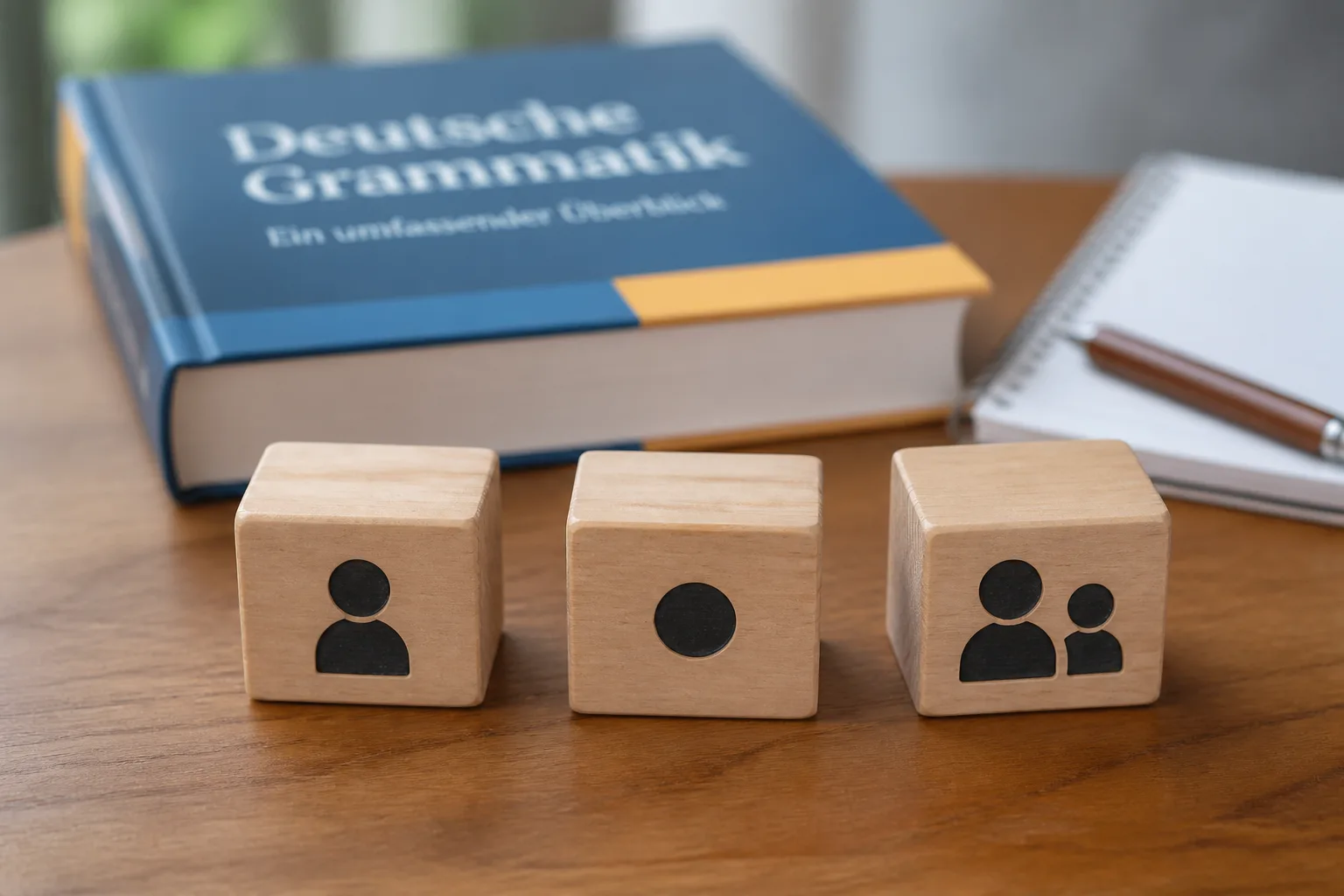
English speakers hear “German has four cases” and panic. You can ignore genitive for a long time. Focus on three: nominative, accusative, and dative. They answer: Who is doing what to whom?
Nominative: the subject
The nominative is the “doer.”
- Der Mann liest. — The man is reading.
- Die Frau kocht. — The woman is cooking.
- Das Kind spielt. — The child is playing.
Articles: der / die / das (and ein / eine / ein).
Accusative: the direct object
Accusative is what is directly affected.
- Ich sehe den Mann. — I see the man.
- Ich lese ein Buch. — I am reading a book.
- Wir kaufen die Fahrkarte. — We are buying the ticket.
Only masculine articles change in the singular (der → den, ein → einen). That one change is why accusative shows up so early in drills.
Dative: the receiver / indirect object
Dative often marks who receives something—or follows certain verbs and prepositions.
- Ich gebe der Frau ein Geschenk. — I give the woman a present.
- Kannst du mir helfen? — Can you help me?
- Ich fahre mit dem Bus. — I’m going by bus.
Articles become dem / der / dem / den (plural), and many plural nouns add -n (den Kindern).
Word order tip
When you have both, German usually prefers dative before accusative:
- Ich gebe meiner Mutter ein Geschenk.
English can say give a present to my mother or give my mother a present. German likes the receiver first when both are nouns.
Prepositions decide the case
Do not only memorize tables—memorize chunks:
- Accusative-ish movement: für, durch, ohne, um…
- Always dative: mit, nach, bei, von, zu, aus, seit…
- Two-way (Wechselpräpositionen): in, auf, an… depend on location vs movement
At A1, mastering mit dem, zum, bei der already upgrades your speech.
A practice plan that builds confidence
- Label subjects in simple sentences (nominative).
- Drill masculine den/einen objects (accusative).
- Practise giving/helping/thanking sentences (Dative).
- Add dative preposition phrases from the same lesson’s vocab.
If a sentence feels “off,” ask: Who is doing it? What is affected? Who receives it? That three-question check fixes more mistakes than memorizing endings in isolation.
Cases are a map, not a maze. Learn the three routes you travel every day—then genitive can wait until you are reading longer texts.